


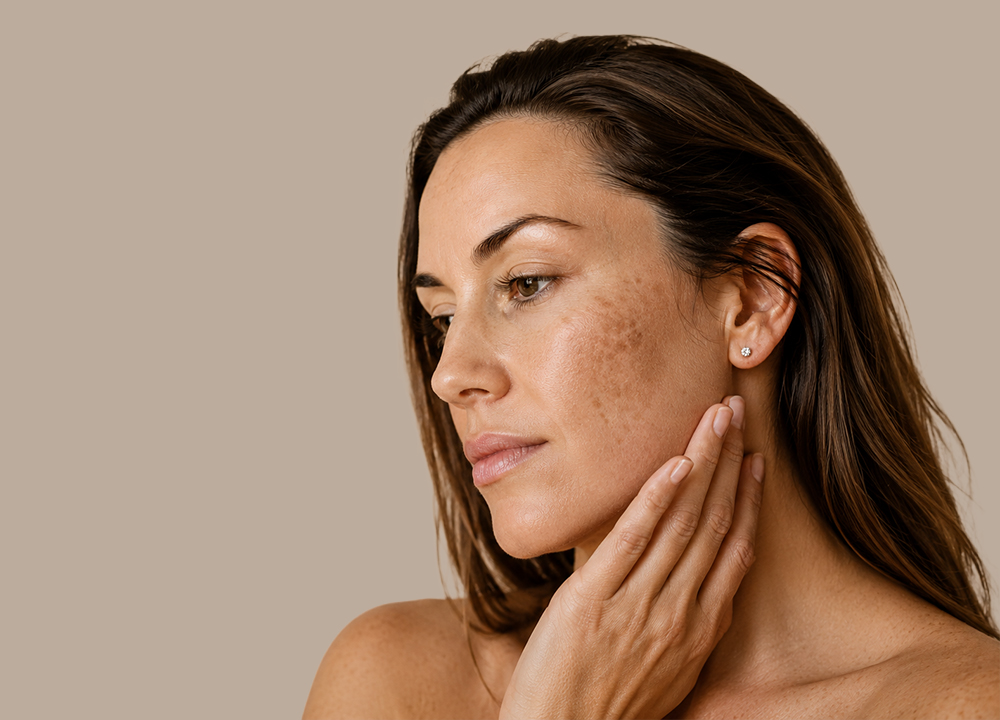
Brown spots often become more noticeable during summer because UV exposure stimulates melanin production, even in previously treated skin. Conditions like sun damage, melasma, and age spots can all darken with cumulative UV exposure, making daily sun protection and early treatment critical for maintaining an even complexion.
You spent the winter improving your skin. Maybe your complexion looked brighter, more even, and a little healthier.
Then summer arrived.
Suddenly, those brown spots seem darker. Areas you barely noticed before are now showing up in every mirror and photograph.
If you’ve wondered why this happens, you’re not imagining it. Brown spots often become more visible during summer because ultraviolet exposure activates pigment-producing cells in the skin.
Why Do Brown Spots Get Darker During Summer?
UV radiation triggers melanocytes, the cells responsible for producing pigment, to increase melanin production as a protective response. Even brief sun exposure can activate this process, causing existing pigmentation to darken and making previously invisible damage more noticeable over time.
Most people assume new brown spots suddenly appear during summer. In many cases, the pigment was already there.
Years of cumulative sun exposure can create pigment changes beneath the surface of the skin. As UV exposure increases during summer months, those pigment-producing cells become more active, making discoloration easier to see.
This is why many people notice:
- Darker freckles
- More visible age spots
- Uneven patches of pigmentation
- Worsening discoloration on the cheeks, forehead, or upper lip
The pigment was often already present. Summer simply makes it more noticeable.
Is It Sun Damage, Melasma, or Age Spots?
Sun damage, melasma, and age spots all involve excess pigment but develop differently. Age spots are typically linked to cumulative UV exposure over decades, while melasma is often influenced by hormones, heat, and sunlight. Proper diagnosis is essential because treatments vary significantly between conditions.
Not all brown spots are the same. Some are caused by long-term UV exposure, while others are more closely tied to hormones, heat, inflammation, or a combination of triggers.
Sun Damage
Sun damage typically appears as scattered areas of pigmentation caused by years of UV exposure. These spots often develop on the face, chest, shoulders, and hands because those areas receive the greatest cumulative sun exposure.
Age Spots
Age spots, also called solar lentigines, commonly appear after age 40 and are directly linked to long-term sun exposure. Despite the name, they are caused more by cumulative UV exposure than aging alone.
Melasma
Melasma behaves differently. It often appears as larger patches of discoloration on the cheeks, forehead, nose, or upper lip. Hormonal fluctuations, heat, and UV exposure can all contribute to flare-ups, making summer one of the most challenging seasons for patients with melasma.
Because melasma can worsen when treated too aggressively, proper evaluation is especially important before choosing a treatment.
Why Sunscreen Alone May Not Be Enough
Broad-spectrum SPF 30 or higher remains the foundation of pigment prevention, but sunscreen alone cannot reverse existing discoloration. Visible light, heat exposure, and cumulative UV radiation can all contribute to pigmentation disorders, particularly melasma.
Sunscreen is essential, but it is only one part of pigment control.
Many patients apply sunscreen in the morning and assume they are protected for the full day. In reality, sunscreen breaks down with time, sweat, water, and outdoor exposure. During prolonged time outside, reapplication every 2 hours is typically recommended.
For patients struggling with pigmentation, additional protection may include:
- Wide-brimmed hats
- Protective clothing
- Seeking shade during peak UV hours
- Medical-grade skincare designed to support pigment control
Preventing further damage is just as important as treating what is already visible.
Which Treatments Work Best for Brown Spots?
BBL® HEROic™, CoolPeel® laser resurfacing, chemical peels, and RF microneedling are commonly used to address pigmentation, uneven skin tone, and signs of photoaging. Treatment recommendations vary based on the type of pigmentation, skin type, and severity of discoloration.
At Fresh Aesthetics, treatment recommendations are based on the specific cause of pigmentation rather than a one-size-fits-all approach.
Depending on your skin, treatment options may include:
- BBL® HEROic™ SkinSmooth to target visible pigmentation, redness, and uneven tone
- CoolPeel® Laser Skin Resurfacing to improve texture, tone, and signs of photoaging
- RF Microneedling to stimulate collagen while improving overall skin quality
- Chemical Peels to accelerate cell turnover and brighten uneven pigmentation
- Medical-grade skincare to support long-term pigment control and maintenance
The most effective plans often combine in-office treatments with a customized skincare regimen designed to maintain results between visits.
Can Brown Spots Be Prevented?
While not all pigmentation can be prevented, daily UV protection significantly reduces the risk of worsening discoloration. Consistent sunscreen use helps limit visible photoaging and can reduce the development of new UV-induced pigmentation over time.
The goal is not perfection. The goal is preventing today’s spots from becoming tomorrow’s larger problems.
Small daily habits often make the biggest long-term difference:
- Wearing sunscreen every day
- Reapplying sunscreen when outdoors
- Treating pigmentation early
- Maintaining a consistent skincare routine
- Scheduling professional treatments before damage becomes harder to correct
The earlier pigmentation is addressed, the more treatment options are typically available.
The Bottom Line
Brown spots often become darker during summer because UV exposure increases melanin production in existing areas of pigmentation. Whether the cause is sun damage, age spots, or melasma, early intervention and appropriate treatment can help maintain a brighter, more even complexion throughout the year.
If you have noticed brown spots becoming more visible this summer, there is usually a reason.
The good news is that modern treatment options can address many forms of pigmentation while helping prevent future discoloration from becoming more difficult to treat.
Understanding the cause is the first step. Treating it correctly is the next.
Ready to Learn What’s Causing Your Brown Spots?
Every type of pigmentation behaves differently, which is why a personalized evaluation matters.
Schedule a consultation with Fresh Aesthetics to determine whether your discoloration is related to sun damage, melasma, age spots, or a combination of factors, and develop a treatment plan designed specifically for your skin.